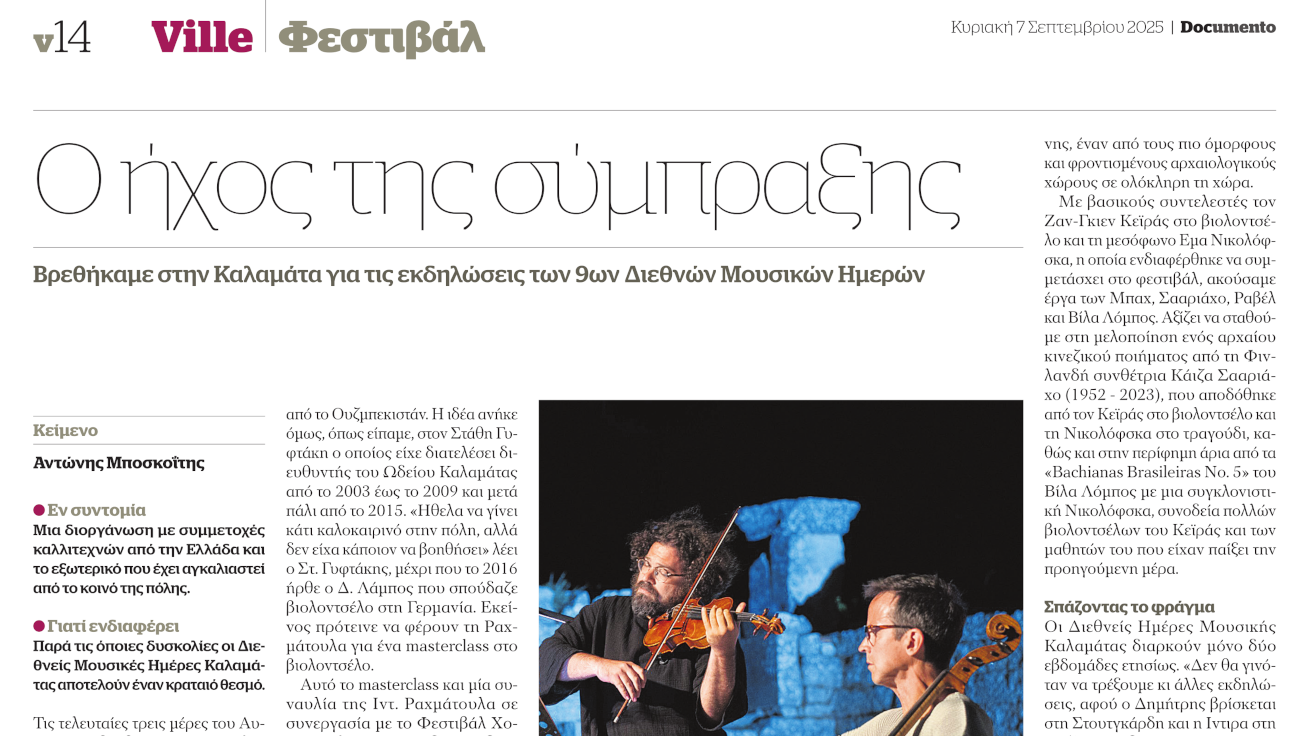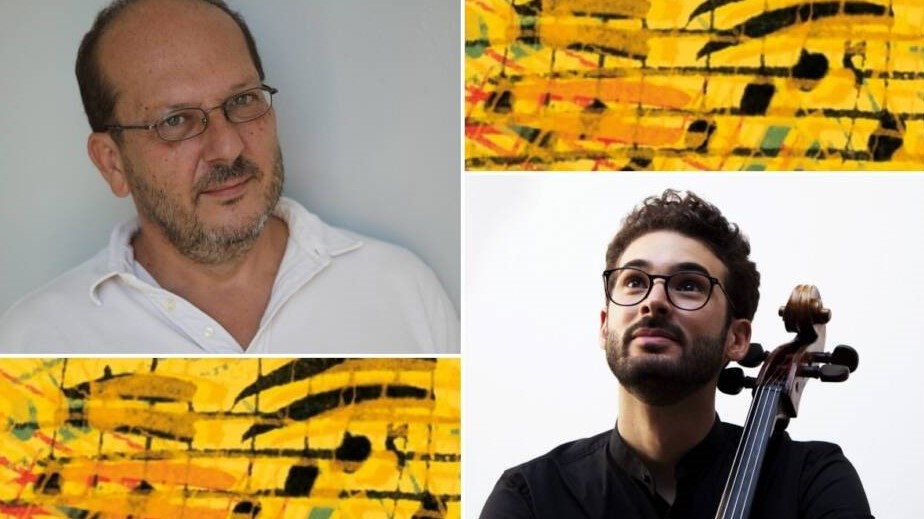


Dimitrios Lampos on the unifying power of music in Kalamata – Interview for monopoli.gr (English translation)
Aristoula Zachariou | The text was published on monopoli.gr on 25 August 2025.
As the International Kalamata Music Days return for their 9th consecutive year, from 24 August to 6 September, cellist and co-artistic director of the festival Dimitrios Lampos shares with us the vision behind this year’s edition.

Photo by Rose Chen
If music can be seen as a unifying force that transcends differences, bridges distances and binds us together in a shared experience, then the 9th International Kalamata Music Days aim, through this year’s artistic programme, to illuminate the path towards exactly that direction.
For cellist and artistic co-director Dimitrios Lampos, this unifying force is expressed in the shared experience that arises during a live performance —defying the rampant individualism of our times— and in the conviction that music remains one, regardless of era, genre, or the artistic and cultural approaches through which it is expressed.
For this reason, the 9th International Kalamata Music Days, through the diversity of this year’s programme, seek to highlight a common ground: the very thing that compels us to make music —the timeless experience of being human.
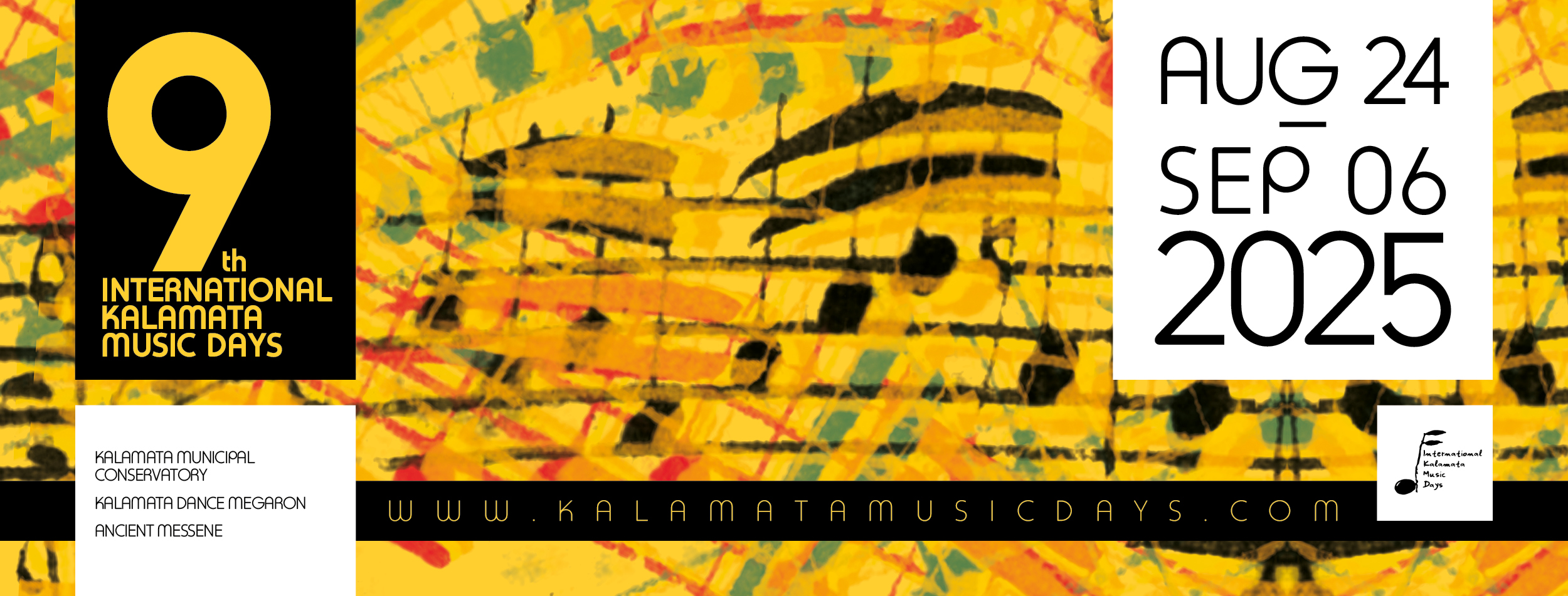 The Messenian capital once again welcomes, for the ninth consecutive year, the International Kalamata Music Days, an established festival that has become a significant cultural event in Greece. From 24 August to 6 September, the city transforms into a vibrant hub of artistic creation, hosting musicians and soloists from Greece and abroad, and encouraging encounters between different traditions and musical idioms —from the Medieval era to the most contemporary artistic expressions— through a programme featuring concerts, high-level masterclasses, and the festival’s first International Young Artists Competition.
Alongside cellist Dimitrios Lampos, the artistic direction of the festival is shared by cellist Indira Rahmatulla and composer Stathis Giftakis. The International Kalamata Music Days are the fruit of a shared vision promoting creative collaboration, artistic exchange and the development of new talent, fostering outward-looking cultural activity while simultaneously strengthening and showcasing the cultural life and identity of the city through education and live musical performances.
On the occasion of this year’s edition, Dimitrios Lampos speaks about the vision behind the programming, the educational role and new facets of the festival, its opening to the world, and the cultural footprint it leaves on the Messinian capital.
Tell us about this year’s programme of the 9th International Kalamata Music Days. What does it include, and who are the artists involved?
This year’s artistic progamme consists of 14 concerts featuring artists and ensembles from Greece and abroad, to be presented at the Kalamata Dance Megaron and the Ecclesiasterion of Ancient Messene. Among those appearing are the Balkan music ensemble TRI i DVE, the Greek Medieval and Renaissance music ensemble Lycabettus, and the vocal ensemble TRËİ, as well as musicians such as cellist Jean-Guihen Queyras, violinists Ionian Ilias Kadesha and Pablo Hernán Benedí, mezzo-soprano Ema Nikolovska, cellist Hugo Rannou, percussionist Emil Kuyumcuyan, and jazz double bassist Arionas Gyftakis.
The festival’s theme is “a musical journey from the Middle Ages to pop and the avant-garde”. What is the underlying idea behind this connection?
The theme of the 9th International Kalamata Music Days is centred on the concept of diversity. In a present era marked by extreme individualism, the shared emotion experienced during a live concert is, in itself, a political act. Moreover, we are convinced that authentic Music —and, by extension, Art— is ultimately one, regardless of the different cultural or artistic approaches concerning its means and modes of expression. This year’s artistic planning, therefore, begins with an attempt to musically reconstruct the wealth of cultural diversity that passed through the Peloponnese during the High Middle Ages —while also incorporating Western art music, Balkan music, traditional music, and jazz— and reaches all the way to a “reconsideration of boundaries” between avant-garde art music and popular music. Our hope is that through this year’s concert programme we will be able to sense the common ground that ultimately leads us to make Music. And this common ground can only be the timeless experience of being human.
“Through this year’s concert programme, we hope to sense the common ground that leads us to make music: the timeless experience of being human.”
How difficult is it to bring such different musical worlds together in one programme without losing cohesion?
These musical worlds are perhaps not so different after all, provided they are characterised by authenticity of expression. The fact that someone plays, for example, on gut strings in order to explore the “authentic” musical language of the Baroque is not, I believe, a sufficient reason for them not to be curated alongside an ensemble whose vehicle of expression may be imaginative jazz harmonic structures. I would say that the cohesion of an artistic programme is mainly the result of qualitative and aesthetic criteria, not of musical categories.
From the beginning, the festival has placed significant emphasis on its educational mission. How do you see its development over the years, what has it contributed to the festival’s identity, and where do you hope to take it in the future?
The festival was born as a result —and a natural consequence— of the musical flourishing that took place in Kalamata in previous decades. Recognising the importance of the Municipal Conservatory’s educational work in this development, we placed at the heart of our activities the organisation of international music workshops. At this point, we would like to express our heartfelt thanks to the George & Victoria Karelia Foundation for the financial support it has provided for many years to students of the conservatory, enabling them to participate actively in the festival’s masterclasses.
Regarding the development of the educational work of the International Kalamata Music Days over the years, we could not be happier. The artists who share our educational vision and teach within the festival are exceptional and, in many cases, professors at music universities abroad. In the case of Jean-Guihen Queyras, one of the world’s foremost cellists, our festival is —so far at least— the only one in the world in which he has agreed to teach a masterclass. All these outstanding artists have granted the International Kalamata Music Days international recognition and reach. We are truly grateful for this. What we are still seeking, however, is a solution for creating or finding a “common home” for the masterclass participants, as they are currently housed in different accommodations scattered across the city. This makes it difficult to welcome international participants and also hinders the connection between members of our musical community.
“I personally feel that I have been enriched artistically, and as a human being, to a great extent through curating the programmes and through the shared experience of carrying out the International Kalamata Music Days.”
The International Young Artists Competition is a new element of the festival. What motivated its creation, and what does it hope to offer?
The festival, as a true offshoot of the city’s cultural growth, is deeply connected with Kalamata and defines itself as a catalyst for local musical development and creativity. However, whenever an institution experiences upward momentum and international success, there is always the risk of becoming detached from its roots. To enhance our communication and connection with the city further, we decided to establish the 1st International Young Artists Competition as part of the festival. Its aim is to offer a young musician or chamber ensemble the opportunity to present their own concert next year, within the artistic programme of the 10th International Kalamata Music Days.
How do you balance your personal artistic identity with the ideas of your collaborators when planning the festival?
The festival is the result of a shared vision —one that continues to mature and grow more defined through the planning of each new edition. I personally feel that I have been enriched artistically, and as a human being, to a great extent through curating the programmes and through the shared experience of carrying out the International Kalamata Music Days. It is not really a matter of balancing artistic identities, but rather one of shared creation and the dynamic artistic evolution of all of us —the festival and the city alike.

The artistic direction of the festival is signed by cellist Indira Rahmatulla, composer Stathis Giftakis and cellist Dimitrios Lampos. | Photo by Stylianos Papardelas
How has the local community of Kalamata responded to this cultural event, and how has that response evolved over the years?
Kalamata is an exceptionally music-loving city. This can be seen as the result of the region’s cultural development and the remarkable work of the Municipal Conservatory. As the musicians of a city develop, so too do the listening habits of its audiences. Since the festival arose from the momentum of the local music scene, which was seeking ways to connect with other musical centres, there has never been an issue with public response to our concerts. As the festival evolves, so do its listeners —and as their interest in more adventurous repertoire grows, we too dare to raise the artistic bar ever higher.
How important is the festival’s outward-looking nature? In what ways does it “travel” beyond Kalamata?
Extroversion —and essentially the festival’s international character, since it was founded in response to the local music scene’s need for global connection and cultural exchange— is an integral part of its identity. Many of the artists who now appear at the festival have significant international careers, and when they come to Kalamata to perform or teach, they bring with them knowledge and ideas that might not otherwise reach our city. Numerous musicians from other Greek cities and abroad also come to Kalamata to participate actively in the masterclasses. As a result, the city has begun to gain considerable recognition within classical music circles in Europe and around the world.
“As the festival evolves, so do its listeners —and as their interest in more adventurous repertoire grows, we too dare to raise the artistic bar ever higher.”
How does the festival combine its international dimension with supporting and showcasing local cultural life?
This happens in two ways. First, through the international workshops/masterclasses we organise, and our efforts —supported significantly by the George & Victoria Karelia Foundation— to ensure that students of the Kalamata Municipal Conservatory can participate actively. Second, through the conscious inclusion of outstanding local musicians in the festival’s productions, which in turn leads to professional collaborations with top international artists.
The region’s intangible cultural heritage also leaves its mark on the festival. This year, for instance, we asked the Lycabettus ensemble to include in their concert “The Castles of the Morea” music from the Manuscrit du Roi. This collection is associated with the Principality of Achaea and the family of the Villehardouins. Two songs from the manuscript are even attributed to William II of Villehardouin (13th century), father of Isabella —or Isabeau— of Achaea, who resided at the Castle of Kalamata.
The festival is now an important part of your artistic career. How has your involvement with the International Kalamata Music Days enriched your professional path and your development as an artist and educator?
Through organising the festival and participating as a cellist in various productions over the years, I have not only had the opportunity to collaborate with wonderful colleagues and learn a great deal from them, but also to forge important friendships that endure to this day. I have also learned that if you want to achieve something —no matter how ambitious— you simply have to begin and devote yourself to the work. As far as teaching is concerned, everything begins with it and returns to it. We may now be music educators, but we are still, above all, students. In music, we remain schoolboys throughout our entire lives.